
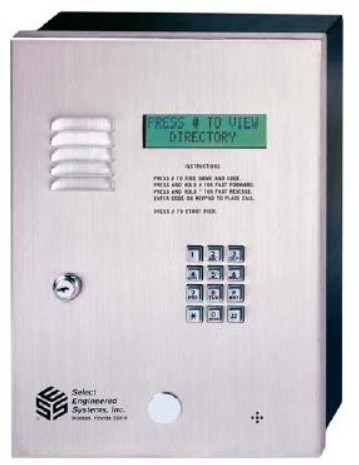
Can I add a telephone entry system to an older gate opener?
Yes, many older gate openers can work with a telephone entry system if the operator has a compatible control-board input for an open command. The key checks are relay input logic, common wiring, power supply, safety devices, communication method, and whether the older operator can still move the gate reliably.
The Telephone Entry System Does Not Usually Run the Gate Motor
A telephone entry system normally does not power or control the gate motor directly. It works as an access-control device. When a visitor calls, enters a valid PIN, presents a card, or receives authorization, the entry system closes a relay contact. That relay signal tells the gate operator to open, cycle, or activate a programmed command input.
This is why older gate openers can often accept a modern telephone entry system. The entry unit does not need to match the operator brand in every case. It needs to provide the type of dry-contact signal the operator control board expects.
Start by Finding the Operator Input Terminals
The first step is identifying the older gate opener’s control-board terminals. Look for labels such as open, cycle, radio, key, push button, access, single button, common, COM, exit, or free exit. Many operators use a momentary normally open dry contact between common and an open-style input, but this must be verified against the operator’s manual or terminal diagram.
Do not guess based on wire color. Older gate systems may have been modified over time with receivers, keypads, timers, loops, fire access devices, or homemade splices. The same pair of wires may not mean the same thing on every operator.
Check Whether the Operator Still Works Before Adding Access Control
A telephone entry system can request the gate to open, but it cannot fix a weak operator. Before adding a new entry panel, confirm that the gate opener works from an existing remote, push button, keypad, loop detector, or manual test input. If the gate does not move reliably from a known working control, the operator should be evaluated before adding new access hardware.
Common older-operator problems include bad batteries, worn relays, corroded terminals, weak transformers, failing control boards, loose common wiring, bad limit switches, damaged loop detectors, faulty photo eyes, gate drag, worn rollers, or binding hinges. A new telephone entry system will not correct those conditions.
Relay Output Is the Main Compatibility Point
Most telephone entry systems provide relay terminals labeled COM, NO, and sometimes NC. COM is common. NO is normally open. NC is normally closed. For many vehicle gate open commands, COM and NO are used as a dry-contact closure.
The relay should usually be programmed as momentary for a normal open or cycle command. A latching relay may hold the gate open if wired to the correct input, but it can create problems if used where the operator expects only a short pulse. Verify whether the older gate opener needs momentary activation, maintained contact, hold-open logic, or a separate timer input.
Power for the Entry System Must Be Separate and Correct
Do not assume the older gate opener can power the telephone entry system. Some operators provide accessory power, but the available voltage and current may not support a modern cellular, video, keypad, reader, or touchscreen panel. The entry system should be powered according to its own required voltage, AC/DC type, VA rating, wattage, amperage, polarity, and backup-power requirements.
If the system includes an electric strike, maglock, card reader, fob reader, receiver, cellular module, or camera, those accessories may need separate regulated power. A gate operator battery backup also does not automatically back up the entry panel, modem, cellular communicator, router, receiver, or lock power supply.
Communication Method Matters
Adding telephone entry to an older gate opener does not mean the site must use an old landline. Depending on the selected system, the communication path may be cellular, traditional phone line, VoIP/SIP, Ethernet, Wi-Fi, or cloud-based app access. The communication side and gate-control side should be checked separately.
The entry system may communicate by cellular or internet, but the gate opener still receives a relay command. That separation is helpful on older operators because the access-control technology can be updated while the operator input remains a simple low-voltage command circuit.
Safety Devices Still Control Gate Movement
Older gate operators may have different safety-device requirements depending on model, age, control-board generation, and current site configuration. A telephone entry system does not override photo eyes, edge sensors, loop detectors, stop circuits, monitored safety inputs, or operator fault logic.
If the telephone entry relay activates but the gate does not move, the operator may be blocked by an active safety input, open stop circuit, low battery, bad loop detector, limit fault, or mechanical resistance. Always separate access authorization from actual gate movement.
Technician’s Corner
Older Control Boards May Have Limited Input Options
Some older operators have clear open and common terminals. Others use single-button logic, radio terminals, constant-pressure inputs, or older control wiring. Similar-looking terminals may not behave the same way across operator generations.
South Florida Moisture Can Make Old Wiring Look Incompatible
Rain, humidity, salt air, irrigation, and wet underground conduit can corrode relay pairs and common wires. A telephone entry system may be compatible on paper but still fail if the existing wire path has high resistance or water damage.
Do Not Use the Entry Panel as a Power Supply for Everything
Modern entry panels are often controllers, not large accessory power supplies. Locks, readers, cameras, receivers, and cellular modules must be matched to their correct power source and current draw.
Gate Drag Can Be Misread as Access Failure
If an older swing gate sags or a slide gate has worn rollers, the operator may struggle after a valid open command. The entry system may be working while the mechanical gate system is failing under load.
Before You Match This Hardware
- Record the gate opener brand, model number, control-board number, voltage, and terminal labels.
- Confirm the operator opens from an existing remote, keypad, push button, or test input.
- Identify the correct open, cycle, radio, access, or single-button input.
- Verify common wiring and whether the operator expects momentary or maintained contact.
- Confirm the telephone entry system relay output: dry contact, powered output, NO, NC, momentary, or latching.
- Check whether the new entry system needs landline, cellular, Ethernet, Wi-Fi, VoIP/SIP, or cloud access.
- Verify power requirements for the entry panel, readers, locks, receivers, cameras, and backup devices.
- Inspect safety devices, loop detectors, wet conduit, corroded terminals, and gate movement before blaming compatibility.
Related Technical Categories
- Telephone Entry Systems
- Cellular Access Control Equipment
- Access Control Keypads and Readers
- Access Control Power Supplies
- Gate Opener Circuit Boards
- Radio Receivers
- Vehicle Detection and Loop Detectors
- Safety Photo Eyes and Edge Sensors
Final Compatibility Rule
You can add a telephone entry system to many older gate openers when the operator has a usable command input and the new entry system provides the correct relay output. Before selecting hardware, verify model number, part number, voltage, frequency, relay type, connector style, communication method, credential format, safety devices, wiring condition, enclosure fit, and operator generation.
Tagged Products


