
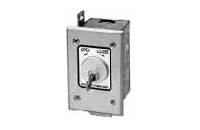
Can an emergency-access key switch be wired differently from a normal resident or employee key switch?
Yes. An emergency-access key switch may use a dedicated FIRE or emergency-open input instead of the normal OPEN, CYCLE, or access-control terminal. Its contact state, maintained or momentary action, alarm response, timer override, safety-input priority, and reset procedure can differ substantially. Match the exact operator manual and local emergency-access requirements before wiring it.
Normal Access and Emergency Access Serve Different Functions
A resident or employee key switch normally provides routine authorized access. It is commonly connected to a momentary OPEN, CYCLE, SINGLE BUTTON, or access-control input. The board receives a brief command, runs its programmed sequence, and then allows timers, loops, remotes, keypads, and safety devices to operate normally.
An emergency-access control is intended for authorized fire, police, emergency medical, or other designated personnel. The operator may provide a separate FIRE, FIRE DEPARTMENT OPEN, EMERGENCY OPEN, HARD OPEN, or programmable priority input. That circuit can have different command priority and may intentionally keep the gate open, activate an alarm, cancel normal closing, or require a reset before routine operation resumes.
The Emergency Input May Use Different Contact Logic
Do not assume both key switches use the same terminals. A normal access input often accepts a normally open dry-contact pulse between OPEN and COMMON. An emergency input may require normally open, normally closed, maintained, or momentary operation depending on the board.
Some emergency circuits monitor a normally closed path and activate when that path opens. Others expect a normally open closure. A visually similar key switch can therefore produce the wrong resting state, leave the emergency input active, trigger an alarm, or prevent normal gate operation.
Verify the board terminal legend, switch contact diagram, and required state at rest. COM on the switch is the movable contact inside the switch block; it is not automatically power common, neutral, or ground.
Emergency Open Can Have Higher Priority
A normal resident key switch usually requests access without changing the operator’s overall mode. An emergency input may act as a priority open command. Depending on the board, it can open a closed gate, reverse a closing gate, hold the gate at the open limit, suspend the automatic-close timer, or ignore certain conflicting close commands.
Some control boards treat a maintained emergency signal differently from a momentary signal. A maintained input may continue holding the gate open until the contact releases. A momentary input may open the gate and then place the controller into a special state that requires another command or manual reset before normal timing returns.
This is why a standard maintained hold-open switch should not automatically be substituted for an approved emergency-access device. The board response, alarm behavior, and release sequence must be documented for the exact operator generation.
Alarm and Reset Behavior May Be Different
Emergency activation can trigger an audible alarm, hard-shutdown condition, diagnostic code, event log, auxiliary relay, or other annunciation. Some boards require the operator to be reset after the gate reaches the open limit. Others return to normal operation after the emergency contact releases and a valid stop, open, or close command is received.
A resident key switch normally should not create that response. Connecting everyday access to the emergency terminal can cause unnecessary alarms, leave the gate open, require repeated resets, or place the operator into a mode intended only for emergency personnel.
Conversely, connecting an emergency-access device to a routine OPEN input may fail to provide the required priority, hold-open behavior, alarm response, or authorized reset logic.
Safety-Input Behavior Requires Exact Verification
Emergency-open inputs can have special interaction with external photo eyes, sensing edges, loops, stop circuits, and other control inputs. On some control boards, an emergency command has priority over selected external inputs so the gate can reach the open limit. On others, monitored entrapment protection and inherent obstruction detection remain active in a different sequence.
Do not generalize this behavior across brands or board generations. Never move an emergency device onto another terminal merely to bypass a fault, and never defeat monitored entrapment protection. The operator manual must identify which inputs are overridden, which remain active, and what reset or safe-mode procedure follows emergency activation.
The Emergency Device May Need Separate Hardware
An emergency-access station may use a fire-department lock box, restricted key cylinder, approved keyed switch, pull cable, manual release, secure relay, monitored enclosure contact, or a combination of electrical and mechanical release hardware.
Routine resident or employee switches may be keyed alike for convenience, while emergency controls can require a restricted cylinder or jurisdiction-approved keying. The enclosure color, labeling, mounting location, tamper resistance, and line-of-sight requirements may also differ.
Do not assume that a standard outdoor key station becomes an emergency-access device simply because it is connected to the FIRE terminal. The complete assembly, keying, wiring method, accessibility, and operational response must match the required application.
Technician’s Corner
Field Note: The Same Contact Can Produce Very Different Results
A normally open closure on a resident OPEN input may start a standard timed cycle. The same closure on an emergency input may hold the gate open, sound an alarm, override conflicting commands, or require a reset. Terminal function matters more than the switch appearance.
Field Note: Maintained Does Not Always Mean “Reset When Released”
Some boards remain in a special operating state after the emergency contact opens. The gate may need a stop command, an additional open command, a close command, or a manual reset. Test the documented recovery sequence before the system is placed into service.
Field Note: South Florida Conditions Affect Emergency Reliability
Salt air, humidity, wind-driven rain, lightning-induced surges, and water entering underground conduit can corrode contacts or damage long field circuits. Emergency-access wiring needs weatherproof enclosures, sealed fittings, corrosion-resistant terminals, surge protection, and periodic functional testing.
Field Note: Keep Routine Access Off the Emergency Circuit
Using the fire or emergency input for residents, employees, delivery personnel, or scheduled hold-open operation can create nuisance alarms and obscure a genuine emergency activation. Keep routine access and emergency priority controls on their intended circuits unless the manufacturer specifically documents a combined function.
Before You Match This Hardware
- Record the operator model, control-board part number, revision, and firmware generation.
- Identify the dedicated FIRE, EMERGENCY OPEN, HARD OPEN, or priority input.
- Confirm normally open or normally closed logic and momentary or maintained action.
- Verify alarm, timer, hold-open, reset, and post-activation behavior.
- Check interaction with photo eyes, sensing edges, loops, stop circuits, and locks.
- Confirm keying, enclosure, tamper, labeling, mounting, and authorized-access requirements.
- Verify whether a secure relay, monitored circuit, manual release, or lock box is required.
- Test normal access and emergency access separately after wiring.
Final Compatibility Rule
An emergency-access key switch can be wired differently because it may control a dedicated priority input rather than a normal access terminal. Match the exact operator model, board generation, terminal function, contact state, switch action, alarm response, reset procedure, voltage, connector type, and safety-device behavior before selecting or connecting the hardware.
Related Technical Categories
- Emergency Access Key Switches and Lock Boxes
- Key Switches and Key Stations
- Gate Operator Control Boards
- Access-Control Relays and Controllers
- Photo Eyes and Sensing Edges
- Weatherproof Enclosures and Surge Protection
