
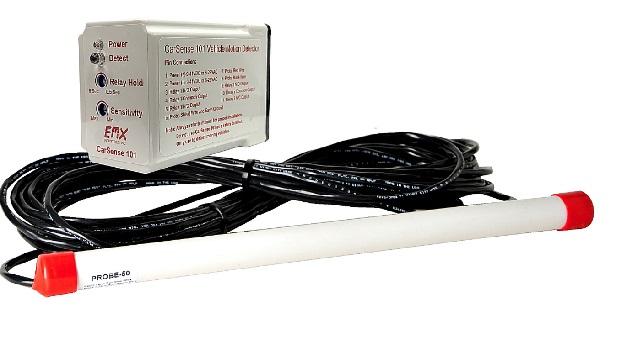
Is my problem the vehicle detector, the loop wire, the control board, or the gate operator?
The problem may be the vehicle detector, loop wire, control board, or gate operator depending on which signal is stuck, missing, or ignored. A detector reads the loop, the loop wire creates the sensing field, the control board interprets the input, and the operator moves the gate. Separate the signal chain before replacing parts.
Start by Separating the Signal Chain
A vehicle detection problem is easiest to understand when the system is broken into four sections: the buried loop wire, the vehicle detector module, the gate control board input, and the operator’s motor/mechanical system. Each section can create similar symptoms, but the failure logic is different.
The loop wire is the sensing antenna in the driveway. The detector module reads that loop and changes a relay output when a vehicle is present or when the loop circuit has a fault. The control board receives that relay signal through an exit, reverse, interrupt, shadow, safety, or open input. The gate operator then uses its motor, gearbox, arm, chain, belt, hydraulic system, or actuator to move the gate.
If the gate opens by remote but not by exit loop, the motor may be fine. If the detector shows constant detect with no vehicle present, the issue may be the loop wire, moisture, sensitivity, or detector. If every input is clear but the gate still hums, stalls, or reverses, the problem may be mechanical or operator-related.
When the Vehicle Detector Is the Suspect
The detector module becomes the first suspect when its power, indicators, relay behavior, or settings do not match the gate condition. A detector with no power LED may have a voltage supply issue, bad socket connection, failed plug-in harness, or failed module. A detector stuck in detect mode with no vehicle on the loop may have a failed detector, but it can also be reacting to a bad loop or wet splice.
Detector settings also matter. A pulse output behaves differently than presence output. Fail-safe behavior can hold an input active during a loop fault. Sensitivity set too high can create nuisance detection, while sensitivity set too low can miss certain vehicles. Frequency settings may need adjustment when multiple loops are close enough to interfere with each other.
When the Loop Wire Is the Suspect
The loop wire is often the problem when symptoms change after rain, irrigation, pressure washing, driveway work, resurfacing, trenching, or lightning activity. Saw-cut loops live in harsh conditions. Water can reach damaged insulation, pavement movement can stress the wire, and poor lead-in splices can corrode inside the conduit or junction area.
A damaged loop may appear as an open circuit, shorted circuit, unstable resistance, short to ground, intermittent detect, or constant loop fault. If the detector reports a loop fault, do not assume the detector itself is bad. The detector may be correctly reporting that the loop circuit is outside its usable range.
Loop wire problems are especially common when the gate works normally from remotes, keypads, or telephone entry commands but the exit loop no longer opens the gate, the reverse loop holds the gate open, or the shadow loop blocks closing with no vehicle present.
When the Control Board Is the Suspect
The control board becomes more likely when the detector relay changes state correctly, but the operator input does not respond. For example, the detector shows vehicle presence and the relay clicks, but the board does not recognize the exit, open, interrupt, or reverse input. That points toward a wiring path, terminal issue, input configuration problem, or board fault.
Control-board issues can also show up when multiple unrelated inputs behave incorrectly. If the board reports a stuck open input, stuck close input, active entrapment input, active vehicle detector input, or fails to power accessories correctly, the board side of the system needs closer verification. Burn marks, corrosion, insect damage, lightning damage, loose terminal blocks, or mismatched replacement boards can all create false diagnosis paths.
When the Gate Operator or Mechanical System Is the Suspect
If all detection inputs are clear and the gate still will not move correctly, the problem may not be the vehicle detector system at all. A slide gate with worn rollers, tight chain, damaged rack, bad V-track, or debris in the travel path may reverse like it is seeing an obstruction. A swing gate with tight hinges, wind pressure, arm geometry problems, or gate sag can overload the operator.
Operator-side problems may include weak batteries, bad capacitors, motor issues, encoder/RPM sensor faults, limit problems, gearbox wear, hydraulic pressure issues, or actuator failure. These symptoms may appear as humming, short movement, repeated reversing, limit setup failure, slow travel, or operation that changes under heat, rain, or heavy wind.
Technician’s Corner
Technical Field Note: In South Florida, a loop problem often appears after heavy rain before it appears as a total failure. Moisture can change insulation resistance and make the detector report intermittent presence, loop fault, or constant detect. That can hold the gate open even when the driveway is clear.
Technical Field Note: A detector stuck active can look like a bad control board. Before condemning the board, check whether the board input clears when the detector output wire is removed from that input. If the input clears, the board may be responding correctly to a bad or active external signal.
Technical Field Note: A gate reversing in wind is not automatically a safety-loop problem. Wind load increases drag on swing gates and large solid slide gates. If the operator current, force, or obstruction logic reacts under load, the symptoms may imitate a reverse-loop activation.
Technical Field Note: Two plug-in loop detectors can look almost identical but have different connector pinouts, voltage requirements, relay behavior, fail-safe logic, or output programming. Match by part number and operator compatibility, not just by shape.
Quick Symptom Guide
| Symptom | More Likely Area | What to Check |
|---|---|---|
| Gate opens from remote but not from exit loop | Exit loop, detector, or input wiring | Detector power, detect LED, relay output, exit input, loop wire condition |
| Gate stays open with no vehicle present | Stuck detector, wet loop, active safety input, or board input | Detector status, loop fault, fail-safe setting, board input indicators |
| Gate reverses during closing | Reverse loop, photo eye, edge sensor, or mechanical drag | Safety inputs, loop activity, gate rollers, hinges, chain, wind load |
| Detector shows loop fault | Loop wire, lead-in splice, pavement damage, or detector | Loop resistance, insulation to ground, moisture, terminal connections |
| Motor hums but gate does not move | Operator, capacitor, motor, gearbox, battery, or mechanical load | Power, batteries, limits, drive system, gate movement by hand |
Before You Choose a Replacement Part
- Confirm whether the failure is on the exit, reverse, interrupt, shadow, safety, or open input.
- Check the detector part number, socket type, connector style, voltage, relay output, and settings.
- Inspect the loop wire, saw cuts, lead-in cable, splices, conduit, and moisture exposure.
- Verify whether the control board input changes when the detector relay changes.
- Confirm that photo eyes, edge sensors, stop circuits, and other safety inputs are not active.
- Check gate movement, rollers, hinges, chain, rack, arm geometry, batteries, capacitors, limits, and motor behavior.
- Match any replacement board, detector, harness, or sensor against the operator model and manual.
Related Technical Categories
- Vehicle Detection
- Loop Detectors
- Gate Safety Devices
- Gate Opener Circuit Boards
- Gate Opener Replacement Parts
- Access Control Accessories
Final Selection Advisory
Before selecting a vehicle detector, loop accessory, control board, or gate operator replacement part, verify the model number, part number, voltage, frequency, connector type, relay logic, monitored safety requirements, terminal labels, and operator generation. A correct diagnosis follows the signal path instead of replacing parts by symptom alone.
