What battery or backup power parts do Genie gate openers use?
Genie gate openers commonly use a battery-backed DC power system with sealed lead-acid batteries, battery wiring, fuses, charging circuitry, and optional solar charging hardware. The exact parts depend on the operator model and voltage platform. Confirm the manual, battery rating, connector style, charger setup, solar panel size, and backup behavior before selecting replacements.
Battery Backup Is a System, Not One Part
On a Genie gate opener, backup power is not only the battery sitting in the control box. The system can include two 12V batteries, battery connector wiring, a battery disconnect switch, retaining hardware, battery fuses, power fuses, charger circuitry, control-board battery monitoring, solar input terminals, and optional solar charging accessories.
The correct replacement depends on the Genie gate operator model. Current Genie residential gate operators commonly use a 24VDC platform, while current commercial models are associated with 36V brushless DC motor platforms. That does not mean every battery, charger, or board is interchangeable. The motor voltage, battery bank wiring, charger logic, fuse rating, and control-board generation must be verified before selecting parts.
Common Battery Types Used in Genie Gate Operators
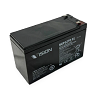
Many Genie gate operator packages are commonly associated with two 12V sealed lead-acid batteries wired as a battery bank. On the GLA24V documentation, Genie identifies the 12V, 7Ah SLA replacement battery as part number 113315.0001.S, with two batteries used in the control box. Similar battery-backed Genie gate platforms should still be verified by model and manual before assuming the same battery applies.
Optional higher-capacity batteries may be supported on certain solar or higher-demand configurations. Genie documentation commonly associates 12V, 35Ah battery hardware with optional solar configurations, but the operator model, enclosure space, wiring, charging method, and required quantity must be confirmed. A larger battery is not automatically correct if the charger, enclosure, fuse protection, or wiring is not designed for it.
Backup Power Parts to Identify Before Replacement
When the backup system is not working correctly, identify more than the battery size. Record the battery part number, voltage, amp-hour rating, terminal style, number of batteries, battery harness arrangement, battery disconnect switch position, fuse condition, charger output, and any fault message shown on the operator display.
Battery-related parts may include 12V 7Ah batteries, optional higher-capacity batteries, battery connector wires, retaining bars, battery cases, battery disconnect components, battery fuse protection, power fuse protection, solar wiring kits, external charge controller hardware, charge controller brackets, and the board or charger circuit that maintains the battery bank.
Why Two 12V Batteries Must Be Wired Correctly
Many DC gate operators use more than one 12V battery to create the required battery bank voltage. If two batteries are used, the connector wiring and polarity matter. Reversed polarity, loose terminals, corroded connectors, incorrect series wiring, or mismatched battery age can cause poor backup operation, fuse failure, charger issues, or board damage.
Do not replace only one battery in a two-battery backup system unless the manufacturer procedure specifically supports it. Batteries in the same bank should normally be matched in type, rating, and condition. Mixing an old weak battery with a new battery can reduce backup performance and make troubleshooting harder.
Solar Charging Parts Are Model and Site Dependent
Several Genie gate operators are solar-ready or include an onboard solar charge controller, but solar is not only a panel plugged into the box. A solar setup must account for panel wattage, battery capacity, external charge controller requirements, solar wiring, mounting location, sun exposure, accessory load, daily cycles, and local weather.
Genie documentation commonly references 24V solar panel kit options such as 20W, 50W, and 90W configurations, with the 20W option using the onboard charger on supported models and larger systems using external charge controller hardware. The exact kit, wiring, and battery configuration should be confirmed against the operator model before selection.
When a Battery Problem Looks Like a Board Problem
A weak battery can imitate a failing control board or motor drive board. The gate may run slowly, stop under load, reverse, alarm, fail after several cycles, or work normally on line power but fail during an outage. A battery may also read acceptable voltage at rest but collapse once the gate starts moving.
Before blaming the board, check battery age, battery voltage under load, terminal corrosion, fuse continuity, charger output, gate drag, and accessory load. Photo eyes, loop detectors, receivers, keypads, telephone entry systems, Wi-Fi boards, and other accessories all draw power. A backup system that worked before may struggle after new accessories are added.
Backup Behavior During Power Loss
Some Genie gate operators support selectable power-loss behavior such as fail-safe or fail-secure logic. Depending on configuration, the gate may open and remain open during a power failure, or close and remain closed when battery voltage drops below a set threshold. These behaviors are controlled by the operator setup and should not be confused with a bad battery.
If the gate behaves differently during an outage than expected, verify the programmed battery backup mode, battery state of charge, charger function, safety inputs, and gate load. A backup system may also run slower on battery power than on normal line power, which can be normal depending on the operator.
Before You Choose a Replacement Part
- Confirm the exact Genie gate opener model and operator generation.
- Record the battery part number, voltage, amp-hour rating, and quantity.
- Verify whether the system uses two 12V batteries, optional 35Ah batteries, or another model-specific battery setup.
- Check battery terminal style, connector wiring, polarity, retaining hardware, and enclosure space.
- Inspect battery fuse and power fuse ratings before replacing batteries.
- Confirm charger output and whether charging is handled by the board, onboard solar controller, or external charge controller.
- Match solar panel wattage, charge controller type, wiring kit, and battery capacity to the operator manual.
- Check gate drag, accessory load, and safety-device status before blaming backup power parts.
Technician’s Corner
Technical Field Note: South Florida Heat Shortens Battery Life
Heat is hard on sealed lead-acid batteries. A battery inside a sun-exposed control box may age faster than expected, especially when the gate cycles often or accessories draw constant power. A backup issue in hot weather should include battery load testing, not just a visual inspection.
Technical Field Note: Corrosion Creates False Battery Symptoms
Humidity, salt air, irrigation overspray, and insects can corrode battery terminals, fuse clips, disconnect switches, and low-voltage connectors. A new battery will not correct voltage drop if the connection path is damaged.
Technical Field Note: Solar Problems Are Often Sizing Problems
A solar-ready operator still needs the right panel size and battery capacity. Shade, short winter sun, heavy gate load, long cycle counts, Wi-Fi boards, receivers, loop detectors, and telephone entry accessories can pull more energy than the panel can recover.
Technical Field Note: Gate Drag Drains Backup Power
A dragging slide gate or binding swing gate can make batteries look weak. Worn rollers, dirty V-track, loose chain, tight hinges, poor geometry, and wind-loaded panels increase current draw and reduce backup cycles.
Related Technical Categories
- Genie Commercial Operator Parts
- Gate Opener Circuit Boards
- Replacement Parts
- Swing Gate Openers
- Slide Gate Openers
- Solar Gate Opener Hardware
- Gate Opener Safety Devices
- Gate Remote Controls and Receivers
- Vehicle Detection and Loop Detectors
Final Matching Advisory
Before selecting Genie gate opener battery or backup power parts, verify the operator model, battery part number, voltage, amp-hour rating, battery quantity, connector type, polarity, fuse rating, charger method, solar panel wattage, charge controller type, enclosure fit, accessory load, safety-device status, and operator generation. Backup power parts should be matched from the operator manual and existing wiring, not battery size alone.