
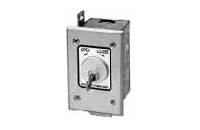
Can the lock cylinder be replaced or rekeyed without replacing the entire key-switch station?
Often, yes. A key-switch station that uses a removable mortise cylinder or interchangeable core can usually be rekeyed or fitted with a compatible replacement cylinder without changing the faceplate, enclosure, wiring, or switch contacts. Fixed tubular, proprietary, cast-in, or severely corroded cylinders may require replacement of the complete station instead.
The Cylinder and Electrical Switch Are Separate Parts on Many Stations
Many commercial key-switch stations use a mechanical lock cylinder to rotate a cam or actuator that operates an electrical contact block behind the faceplate. In this design, the cylinder controls who can turn the switch, while the contact block determines momentary or maintained action, normally open or normally closed logic, and the number of switched circuits.
Because those functions are mechanically linked but physically separate, the lock cylinder can often be serviced without disturbing the operator wiring. Rekeying changes the pins or core so a different key operates the cylinder. Replacing the cylinder changes the complete lock body while retaining the existing faceplate and electrical switch assembly.
Removable Mortise Cylinders Are Usually the Most Serviceable
A station designed around a removable mortise cylinder is commonly the easiest type to rekey or replace. The cylinder threads into the faceplate or mounting bracket and uses a cam on the rear to operate the switch mechanism. A retaining screw, nut, bracket, or anti-rotation component keeps the cylinder secured.
The replacement must match more than the keyway. Verify the cylinder body length, thread and diameter, rear cam shape, cam position, rotation angle, spacer or blocking ring, retaining method, and how far the cylinder projects behind the plate. A cylinder can accept the correct property key and still fail to operate the switch if the cam is too long, too short, offset, or shaped incorrectly.
Many stations accept several cylinder lengths only when the correct spacer ring is used. Installing a longer cylinder without the required ring can place the cam too deeply into the mechanism or prevent the faceplate from seating correctly.
Interchangeable Cores Can Be Changed Without Rewiring
Some key-switch stations use a housing that accepts a small-format or full-size interchangeable core. A control key removes the core, allowing the keying to be changed without removing the complete mortise housing or disconnecting the switch wiring.
This is useful at properties where employee access, tenant access, or master-key groups change regularly. The housing and core must use the same format, keyway family, pin system, and control-key arrangement. A small-format core does not fit a full-size housing, and two visually similar cores may not share the same keyway or retaining design.
Fixed Tubular and Proprietary Cylinders May Not Be Serviceable
Compact gate key switches often use tubular, ACE-style, cam-lock, or proprietary cylinders integrated into the switch body. Some can be factory ordered keyed alike, but many are not designed for field rekeying or for substitution with a standard building cylinder.
If the cylinder is permanently staked, riveted, molded, or mechanically combined with the contact block, replacing only the lock may not be practical. The complete key-switch assembly may also be the better replacement when the model is obsolete, the cylinder type is no longer supported, or the internal actuator has worn along with the lock.
Rekeying Does Not Correct a Worn Switch Mechanism
A locksmith can often rekey a serviceable cylinder, but rekeying does not repair a sticking cam, failed return spring, damaged contact block, welded contacts, loose mounting bracket, or corroded terminals. Before deciding to retain the station, confirm that the switch returns correctly and that its electrical contacts change state reliably in every key position.
With operator power removed and the field wires isolated, continuity testing can verify COM, N.O., and N.C. operation. Also confirm momentary versus maintained behavior and the positions in which the key can be removed. The cylinder must rotate the replacement or existing contact mechanism through the required travel without binding.
Technician’s Corner
Technical Field Note: Match the Cam Before the Keyway
The correct keyway only proves that the key enters and turns the cylinder. The rear cam or tailpiece must still engage the switch actuator at the correct depth, direction, and angle. Cam mismatch is one of the main reasons a mechanically installed cylinder fails to operate the contacts.
Technical Field Note: Faceplate Thickness Changes Cylinder Fit
Surface boxes, flush plates, weather covers, spacer rings, and anti-rotation washers change how far the cylinder projects behind the station. Measure the complete assembly rather than ordering from the cylinder length stamped on an old part alone.
Technical Field Note: South Florida Corrosion Can Make Replacement Safer
Salt air, humidity, condensation, and water entering through conduit can seize cylinder threads, corrode the cam, and weaken the contact bracket. If removal requires excessive force or the rear mechanism is heavily oxidized, replacing the complete station may be more reliable than preserving damaged hardware.
Technical Field Note: Keying and Electrical Compatibility Are Separate
A new cylinder does not change the switch’s electrical design. The station must still match the operator input, momentary or maintained action, N.O. or N.C. logic, contact poles, key-turn direction, and key-removal positions.
Before You Replace or Rekey the Cylinder
- Record the key-switch manufacturer, model, and complete part number.
- Identify whether the cylinder is mortise, interchangeable-core, tubular, cam-lock, or proprietary.
- Verify the keyway, key code, pin system, and any master-key or restricted-key authorization.
- Measure cylinder length, faceplate thickness, spacer ring, rear projection, and thread.
- Match the cam or tailpiece shape, orientation, rotation angle, and retaining method.
- Inspect the switch bracket, return spring, contacts, terminals, gasket, and enclosure for damage.
- Confirm momentary or maintained action, N.O./N.C. logic, poles, and key-removal positions.
- Verify the operator model, control-board input, voltage, connector type, and generation.
When the Complete Station Should Be Replaced
Replace the complete station when the cylinder is fixed or unsupported, the faceplate or back box is damaged, the contact block is unreliable, the actuator no longer aligns, or corrosion has affected the enclosure and terminals. Full replacement may also be necessary when changing from a tubular cylinder to a mortise or interchangeable-core system because the mounting opening, bracket, and actuator geometry are different.
Final Cylinder-Selection Rule
A removable mortise cylinder or interchangeable core can often be rekeyed or replaced without changing the complete key-switch station. Confirm that the existing faceplate, housing, and switch mechanism are designed for cylinder service before disassembly. Verify the key-switch part number, cylinder format, keyway, length, cam, spacer, rotation, contact logic, operator model, voltage, connector type, and control-board generation before selecting replacement hardware.
Related Technical Categories
- Key Switches and Key Stations
- Mortise Cylinders and Interchangeable Cores
- Weatherproof and Vandal-Resistant Enclosures
- Access-Control Pedestals and Mounting Boxes
- Gate Operator Control Boards
- Access-Control Relays and Interfaces
